

— Berthe, I pray thee, take me yet again to play a while…
Berthe could deny her naught. Beneath her stern mien, she remained most tender toward the youngest. Pierre gave heed to neither of his sisters—until… she died. Until that stranger tore from them the light that brightened Aloïs’s days and eves. She should not have asked her to come walk with her. She should not have pressed her so.
A shudder shaketh her anew. Tears betray her and rush once more beneath her lids. She wipeth them away with a sharp motion. Aloïs hath no right to weep, no right to complain nor to dwell upon her fate. She liveth, she.
Seated upon a cushioned seat within the window embrasure that looketh upon the courtyard, in one of the chambers of the hall, she draweth herself in and claspeth her legs within her arms, her gaze turned outward. A pearly sun traceth shapes within the bailey.
The shadows of the past run betwixt the buildings: her sister and she at play, hiding and seeking; Berthe striving in vain to teach her embroidery. Aloïs can yet hear her elder sister sing one of the airs heard at a feast given by their father.
The notes fade upon her lips. A sorrowful, wistful lay… a song for such a day as this. A shape draweth her eye.
The priest hath come and speaketh with sire Aldebert. She beholdeth them from her tower, a witness to deeds that escape her. Her mind remaineth fixed upon the final moments of Dame Hersende.
Her mother’s last words haunt her. She asked pardon for not knowing how to answer to Berthe’s death. She reproached herself for having forsaken Aloïs, for not having prepared her to face her days to come. Yet how might she have done so, when Aloïs herself refused it? Nay, she could take no other place than that which her youngest would grant her. Guilt forbade her to suffer her kin to draw near. The young woman perceiveth now how the distance she chose to set betwixt herself and her parents hath widened into a great chasm.
And now, Dame Hersende goeth unto God in her turn.
Memories rise again with tragedies. The loss of her mother calleth back her former life—ere Berthe’s death, and then Pierre’s; ere she deemed herself what she is not: a warrior; ere she forgot her parents for the sake of battles that bear no meaning.
Without, the servants stir and hasten to make ready the burial. The vigil hath been a trial. Aloïs felt lost, her eyes fixed upon her mother’s lifeless form. Her father seemed no less undone. Tears ran down the furrowed cheeks of the man. He ceased not to repeat that he should have gone before her. Why? Deemeth he truly that there be an order, a precedence to suffering? Or holdeth he that, being a knight, it were meet he should die first?
Doth Baudouin think the same?
— Dame Aloïs?
Marie steppeth timidly toward her mistress. Set upon the window’s ledge, she hath not stirred these many hours.
— Your father biddeth you… the ceremony shall soon begin.
The young woman seemeth to waken from a dream.
— I come…
Aloïs can scarce rise, and when she standeth, the ground reel eth sorely. Marie cometh to her aid.
— Ye eat not, and ye have not slept these two days!
— I am well.
— With your leave, I think not sire Aldebert could endure another burial. Nor your husband neither.
Aloïs presseth her lips.
— I shall make somewhat to fill your stomach, saith Marie.
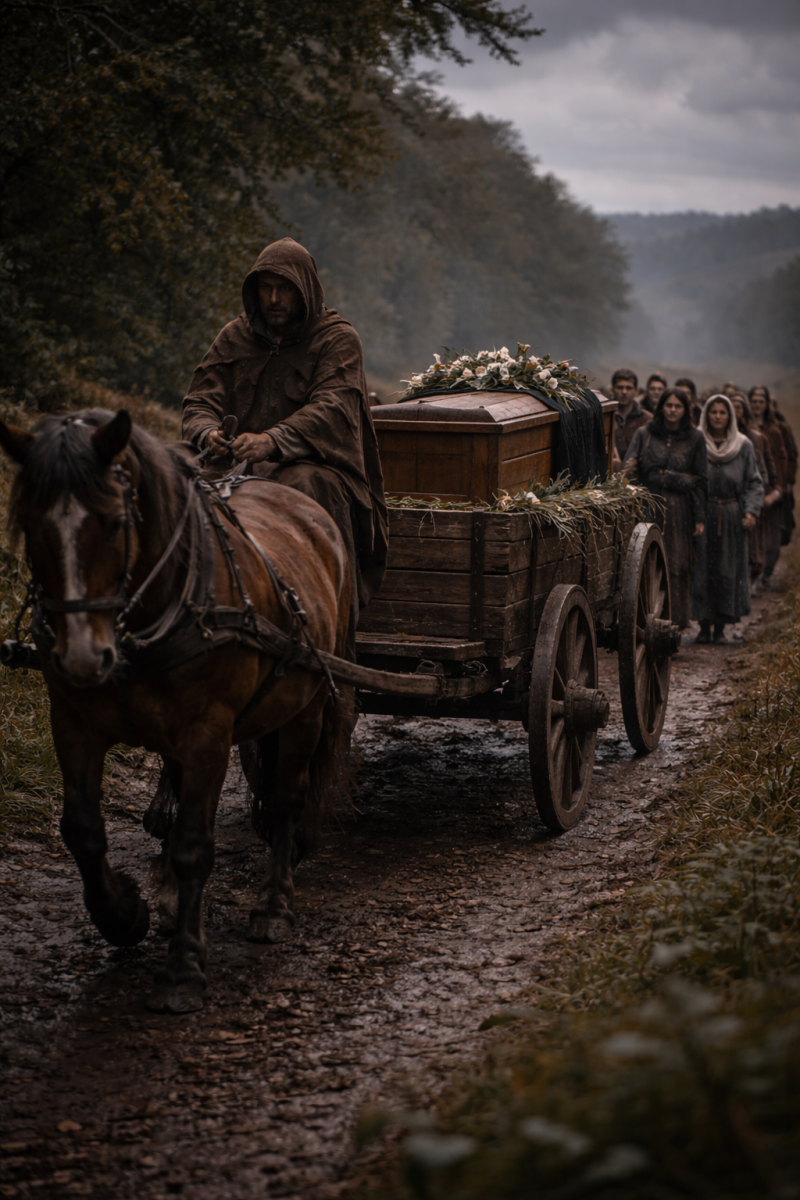
The young woman noddeth, overcome. She goeth down the stair in a daze and meeteth the cool air without. The coffin is borne upon a cart. Sire Aldebert keepeth his eyes fixed upon the procession. Aloïs cometh to take his arm and draweth him from his thoughts. He looketh upon her as though he saw her for the first time. Then sorrow returneth upon his weary face.
— I have bidden the horses be made ready, he saith, as though the naming of this daily command might sweep away the sorrowful weight of that which awaiteth them.
The servants gathereth within the baile. The murmur of their hushed speech riseth softly through the court.
— Thy mother… shall sorely be missed by me. Yet she is with the Lord, and we shall pray for the rest of her soul.
The eyelids of sire Aldebert grow moist once more. Aloïs claspeth his arm yet more tightly.
— Some… already speak of the need for a new marriage, he continueth in a hoarse voice.
The young woman starteth.
— How may such words be spoken unto you at such an hour?
Her father shruggeth.
— The matter of the fief’s future, when I am gone, remaineth unsettled.
The words of Anselme riseth within Aloïs’s mind.
— A man came unto me to speak of this, telleth sire Aldebert. It seemeth he was sent by an emissary of Geoffroy.
— The brother of Henri?
The lord giveth a nod.
— What did he seek in truth?
— I know it not. I told him I had other cares. He departed. Yet I doubt not he shall return.
One of the guards announceth that all is made ready. Sire Aldebert mounteth his horse, his daughter doing the same. Marie cometh to place a piece of bread in her hand. The cart wherein the coffin is laid beginneth to move.
Aloïs guideth her mare forward, her gaze ever fixed upon the cortege. She draweth breath, striving to master her sorrow.
A kind of mist closeth slowly about her. All becometh near unreal: the rite, the lowering of the coffin into the earth, her father’s tears. The priest’s words drifteth without taking meaning. Her mother now resteth beside the graves of the three other children: Berthe, Pierre, and the babe that died at birth. Too many deaths, too much suffering…
Aloïs lifteth her gaze unto the heavens. A raven passeth above the trees and setteth itself upon a branch. It fixeth the young woman with its black eyes—eyes as dark as those of Baudouin. She closeth her lids. Never had she deemed she would so deeply long to behold her husband again. Yet at this hour, she would give all to have him beside her.
90Please respect copyright.PENANAweh0NjOmIN
The days draweth out without end… The passing of Dame Hersende awakeneth too many memories within Aloïs. Upon her return to Terlaze, the young woman withdraweth into herself, refuseth visits, and putteth Belle aside.
Her will faileth her by slow degrees, leading her to dwell upon the past, tears oft rising to her eyes. Many times hath Marie sought to persuade her to walk with Belle, to visit the alleutiers, to seek tidings of Anne and her father. All in vain. None of this holdeth meaning for Aloïs now.
She remaineth upon her bed beside the narrow window of her chamber and gazeth upon the sky. At times she goeth to sit before the lordly house and lingereth there for hours, unmoving, watching the mantle of clouds that heraldeth the autumn.
Her thoughts drift ever toward her childhood, toward her mother. Dame Hersende knew her far better than she had believed. She knew all: she knew of her uncle, and above all she knew the guilt that presseth—and still presseth—upon her youngest child.
The more she pondereth it, the more Aloïs wondereth what stayed her mother from speaking sooner. Why do men wait for their final hour to utter words of such weight?
The young woman draweth a deep breath lest sorrow overcome her once more. She clingeth to the present moment, to that which her gaze may seize. Gusts of wind stirreth the branches, which little by little lose their golden raiment.
Belle kneeleth before her mistress. Sadness is writ plain upon her childish face. Marie standeth not far off, watching them closely.
— My lady…
Aloïs lowereth her eyes slowly toward the child. The girl holdeth forth a page.
— I have made you a gift.
Aloïs casteth a lost glance upon the parchment, as though it were some strange thing. At length she taketh it. A drawing of the castle is traced thereon. The shapes be rough, yet the place may be known by its several buildings…
Aloïs attempteth a smile.
— I would make our home… yet it is fairer in truth.
— I thank thee, it is full fair.
— My lady… would you… would you fain walk with me to gather hazelnuts?
The young woman restraineth a sigh.
— I am over-weary, Belle.
At that moment, a man draweth nigh unto the lordly house. The archdeacon Anselme halteth and regardeth Aloïs steadfastly, then cometh closer once more. The chambermaid setteth forth a stool, which he accepteth. A silence falleth between them. Belle riseth and goeth to Marie, who sendeth her unto the sheepfold. Anselme beginneth in a gentle voice:
— I have heard tell of thy mother. I am right sorry.
Aloïs gazeth upon Anselme without truly seeing him, and turneth her head aside.
— Dame Hersende… knew.
The archdeacon’s eyes narrow.
— She knew what?
A grievous sigh breaketh from Aloïs. Tears swell beneath her lids.
— She knew that all was my doing, she knew that I am to blame for Berthe’s death.
The churchman leaneth slightly forward, doubtful.
— Berthe?
— My sister…
He looketh upon her intently.
— You have lost your sister?
Aloïs noddeth slowly.
— When I was but six years of age.
— I deem not that a child of such tender years may bear the guilt of such a tragedy, saith her brother by marriage.
A tear rolleth down the young woman’s cheek, which she wipeth away swiftly.
Anselme leaneth yet closer and taketh his sister’s hand within his own, as in prayer. This touch seemeth to draw Aloïs from her stupor.
— Thy soul is pure. Thou carest for the fate of others, thou hast a good heart. I understand that thy mother’s passing grieveth thee. Mourn her, think upon her, then live.
Aloïs turneth her gaze aside. Anselme exchangeth a glance with Marie, then riseth.
— I bear tidings of the count.
The young woman stirreth not.
— It would seem Geoffroy and Henri have come to accord. The strife may soon be ended. The men should not tarry long ere they return. Dost thou understand, Aloïs?
— Aye, I understand.
— Baudouin shall soon be with thee. I trow this bringeth thee comfort, doth it not?
The lady looketh upon her brother by marriage, then wipeth her face.
— In truth…
— I am eased thereby.
He riseth slowly and layeth his hand upon Aloïs’s shoulder.
— I shall return anon. Take heed of thyself, I pray thee. Baudouin would not endure to lose thee.
The young lady’s gaze falleth again upon the drawing. She holdeth it forth unto him.
— I had promised thee a sketch.
Anselme taketh it and smileth.
— I thank thee… I shall keep it close.
He maketh her a final reverence, then passeth round the house and goeth toward the castle gate.
Baudouin shall soon be there: the one thought to which Aloïs now cleaveth—and to none other.
ns216.73.217.114da2

 and then Add to home screen.